(03) Forbidden Books
Undeciphered
- (Cultures.)
- Medieval Europe
- (Fields.)
- Cryptography, Manuscripts
- (Sent.)
- 2026.10.24
I dream a lot, mostly about people. The images come and go in pieces, and sometimes there’s touch, even smell. Faces, places and objects are usually clear enough. But not writing. However hard I try to focus, the words won’t hold still long enough to read. Maybe my brain just fails to load them. Maybe they’re noise, with nothing there to get. A book, a letter, it doesn’t matter. When I wake up, I can’t bring any of it back. All I keep is the feeling that I was reading.
Later I found out someone had actually studied this. Ernest Hartmann was a psychiatrist who studied dreams. In 2000 he wrote a paper with a kind of adorable title: “We Do Not Dream of the 3 R’s.” Reading, writing and arithmetic¹. We rarely dream of reading or writing. He had 456 dream reports read through, and not once was anyone reading or writing. My guess is the page was blank all along. My brain sketches something that looks like a page of words, sets it in front of me, and lets me think I’m reading. (A bit like early AI images, where the lettering always melted into nonsense.)
Which made me think of a book. One that even someone three coffees in couldn’t make sense of.
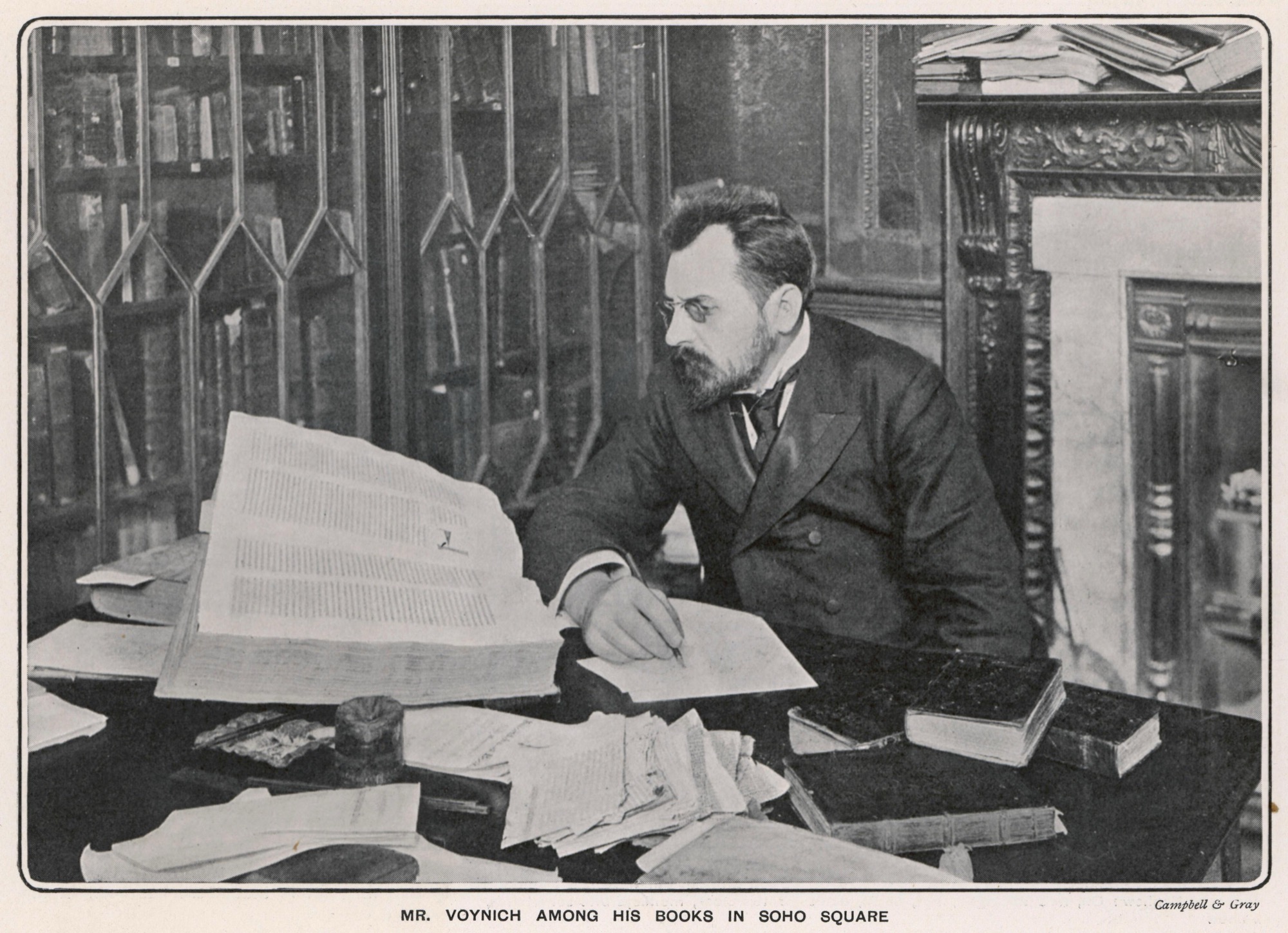
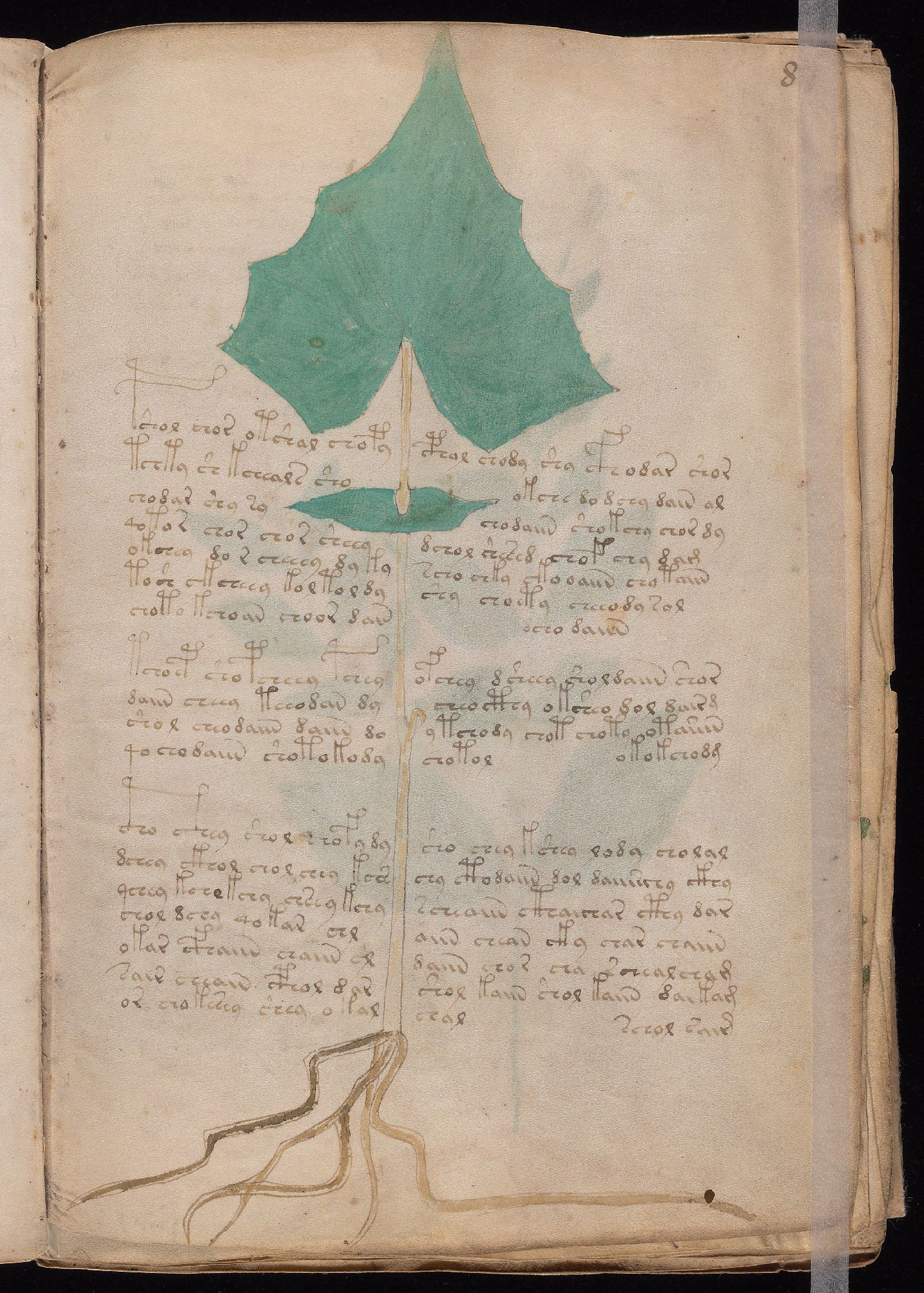
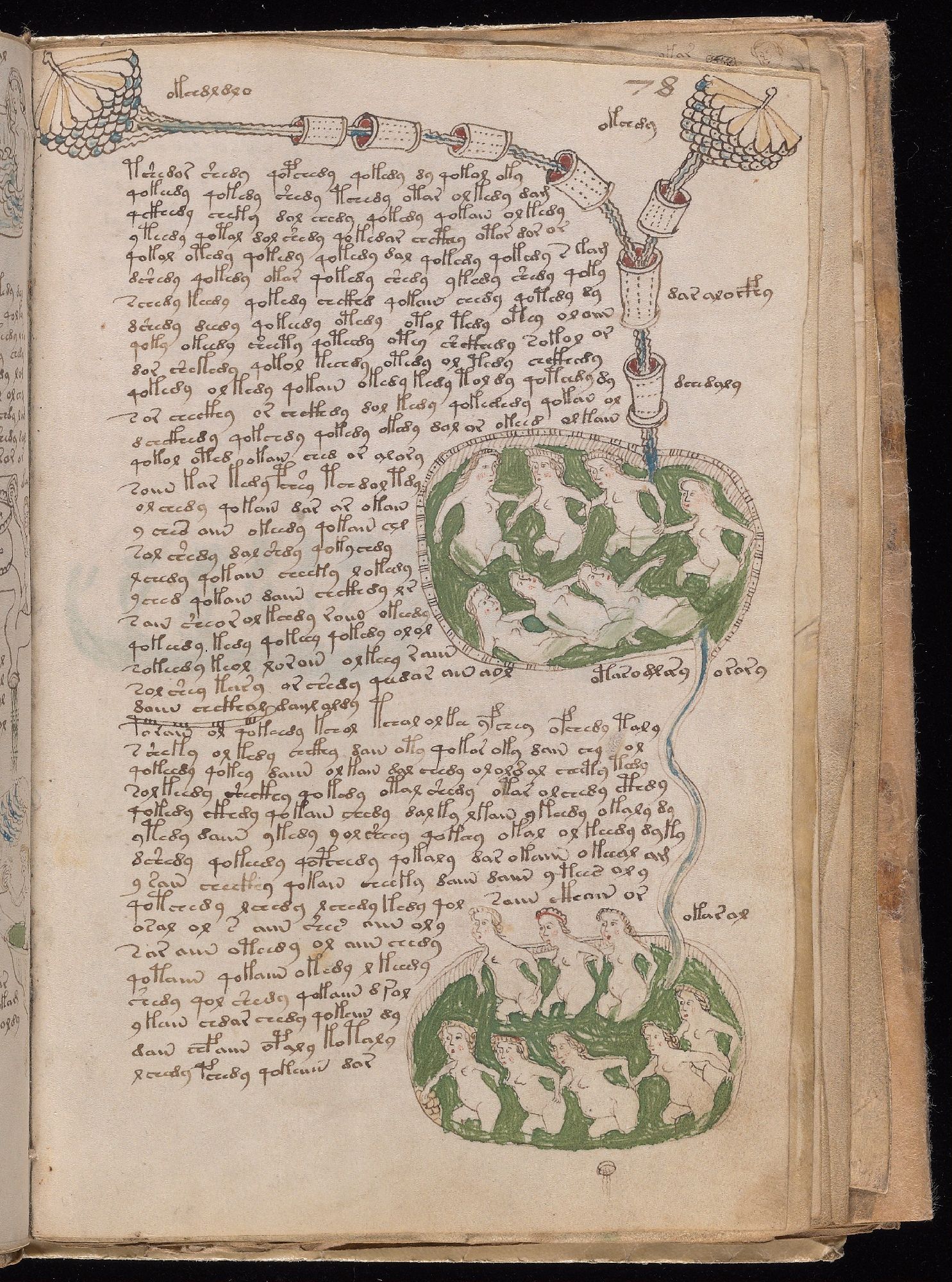
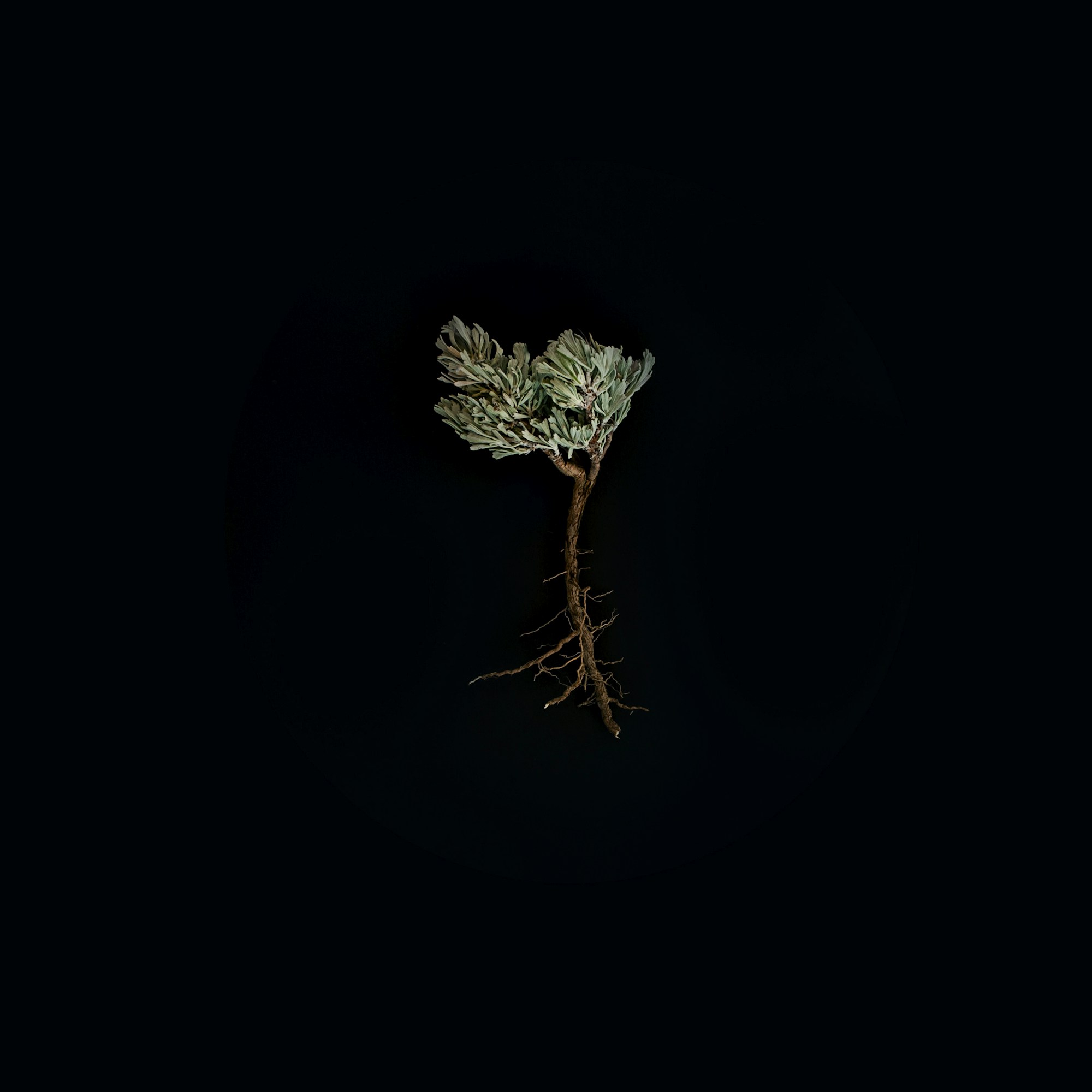
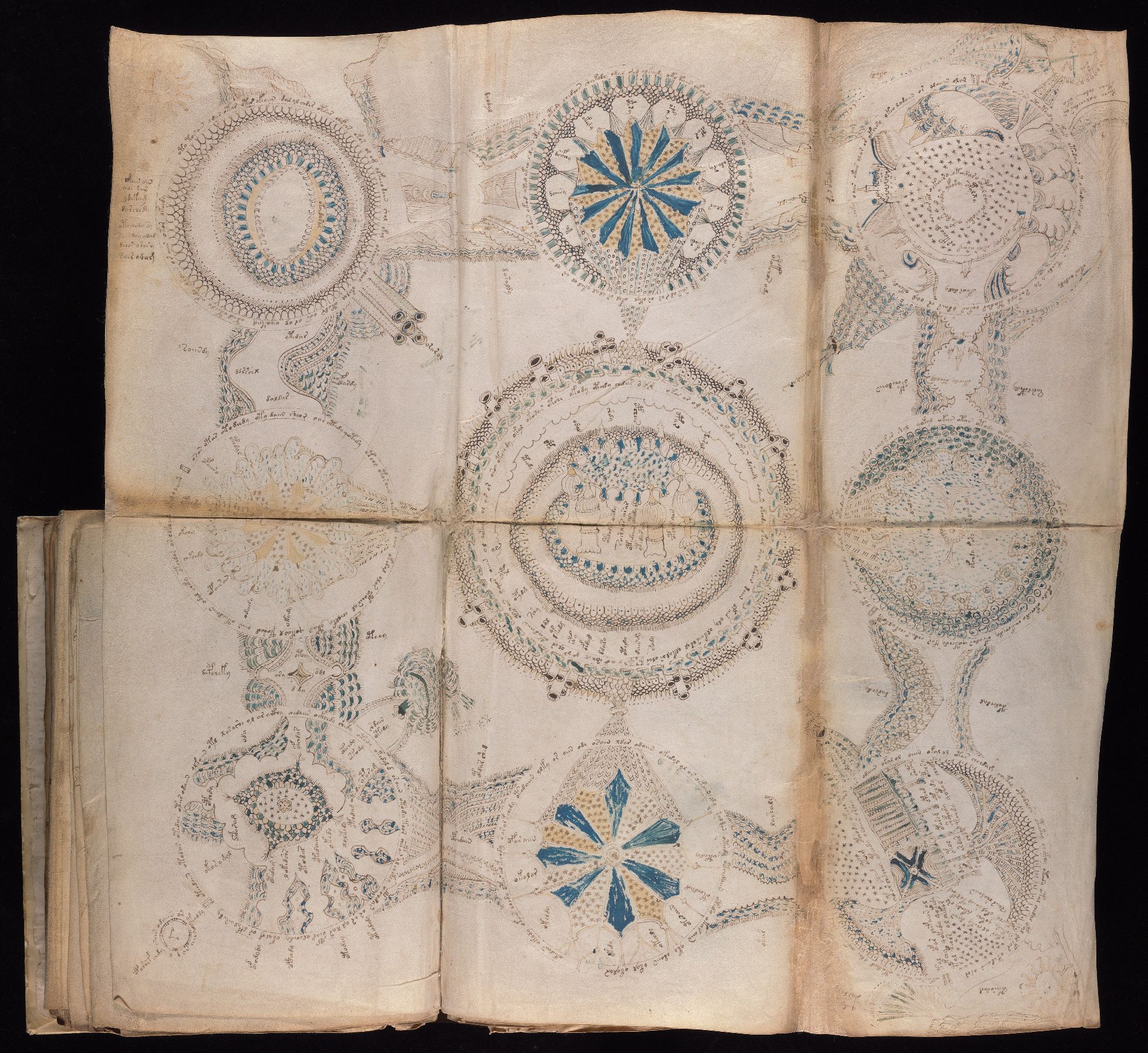
The Voynich Manuscript. It’s named after Wilfrid Voynich, the bookseller who bought it in 1912. These days it’s at Yale, in the Beinecke Rare Book and Manuscript Library, call number MS 408. The whole thing has been scanned and put online, so if you’re curious, go have a look.
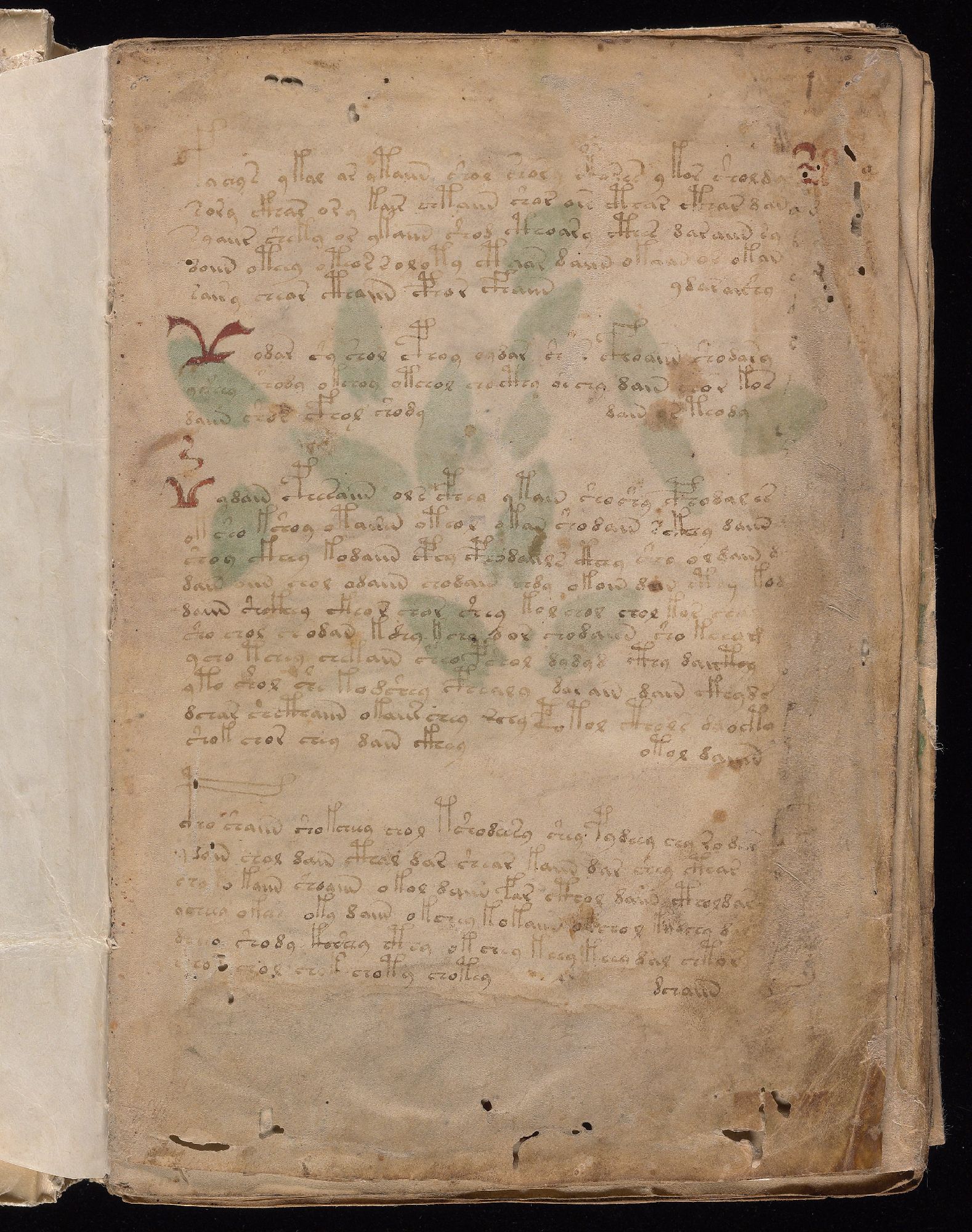
I open the first page (f1r). A few paragraphs start with a red letter. The lines are neat and even. The strokes flow, with no sign of anyone stopping to think. Whoever wrote this knew what they were writing. At the very bottom, in the blank margin, there’s a Latin signature you can barely see in normal light: “Jacobj à Tepenecz,” the name of a court botanist from the early 1600s. It only really shows up under special lighting. So among the few words on this page anyone can read, one is a name. I keep wondering who wrote it there, and how they felt doing it (since, honestly, nobody can read the rest).
So how old is it? In 2009, Greg Hodgins and his team at the University of Arizona cut tiny slivers from the edges of four pages for radiocarbon dating. The answer came back somewhere between 1404 and 1438². But that’s the age of the parchment. Ink can’t be dated. So the pages are early fifteenth century, and whether the words went on at the same time, no one can say for sure. (Right. Even when it was written is still a question.)
The earliest mention we have is a letter from 1639. A man in Prague named Georg Baresch writes to the Jesuit scholar Athanasius Kircher in Rome, copies out a few lines, and asks for help. He calls the book a “Sphynx,” the monster outside Thebes who asked a riddle and ate anyone who got it wrong. And he complains that it’s been “taking up space uselessly in his library” for years³. Unreadable, useless, and he still never got rid of it. It just sat there on the shelf. I wonder if it took up more room in his head than any book he could actually read.
After that, people kept speaking up, one after another, each one saying “I’ve cracked it.”
- In 1921, William Newbold of the University of Pennsylvania said it was a cipher by the thirteenth-century friar Roger Bacon. To read it, you had to study tiny marks along the edges of the strokes under magnification. Another scholar later showed the marks were just cracks, left as the ink dried.
- In 2016, two researchers at the University of Alberta ran it against hundreds of languages by computer. Underneath, they said, it was Hebrew, with the letters in each word scrambled.
- In 2019, a researcher at the University of Bristol said it was written in “proto-Romance,” a guide to daily life put together by nuns. The university later took the story down.
Every time, someone quickly stood up and said no. The odd thing is how different the answers are. Herbal remedies. Gynecology. The daily lives of nuns. Roger Bacon’s scientific discoveries. Maybe everyone reads in this book what they already wanted to read. Like the Room of Requirement in Harry Potter, the book is just a room, and it becomes whatever you need.
In 2004, Gordon Rugg of Keele University in England offered another possibility. Maybe the book doesn’t mean anything at all. (In 2016, the science site ScienceAlert ran a story whose headline said it outright: the “World’s Most Mysterious Book” is an elaborate hoax. Here it is.) He drew a table with three columns, for the beginnings, middles and ends of words. Over it he laid a card with three holes cut in it. Slide the card, copy down what shows through the holes, and you can fill a whole book with something that looks like language and says nothing⁴.
I find that possibility so cool. If it’s true, then six hundred years ago someone spent a very long time, very carefully, writing a whole book of words that mean nothing. And generation after generation, an emperor who supposedly bought it, scholars, codebreakers, computers, have puzzled over it. The look of writing, with nothing inside. A prank across six centuries!
Writing this, I open the manuscript one more time. Okay. Still can’t read a word. But I still want to keep scrolling, one page, then another. If someday someone proves it means nothing at all, will I still want to open it? Or was the thing that keeps pulling people back never what it says?
¹ Ernest Hartmann, “We Do Not Dream of the 3 R’s: Implications for the Nature of Dreaming Mentation,” Dreaming 10(2), 2000, 103–110.
² Greg Hodgins, University of Arizona, radiocarbon dating, 2009.
³ Georg Baresch to Athanasius Kircher, 21 April 1639. Archives of the Pontifical Gregorian University, Rome, APUG 557, fol. 353.
⁴ Gordon Rugg, “An Elegant Hoax? A Possible Solution to the Voynich Manuscript,” Cryptologia 28(1), 2004, 31–46.
(Share.)
You might also likeMedieval Europe, Cryptography, Manuscripts, and more...